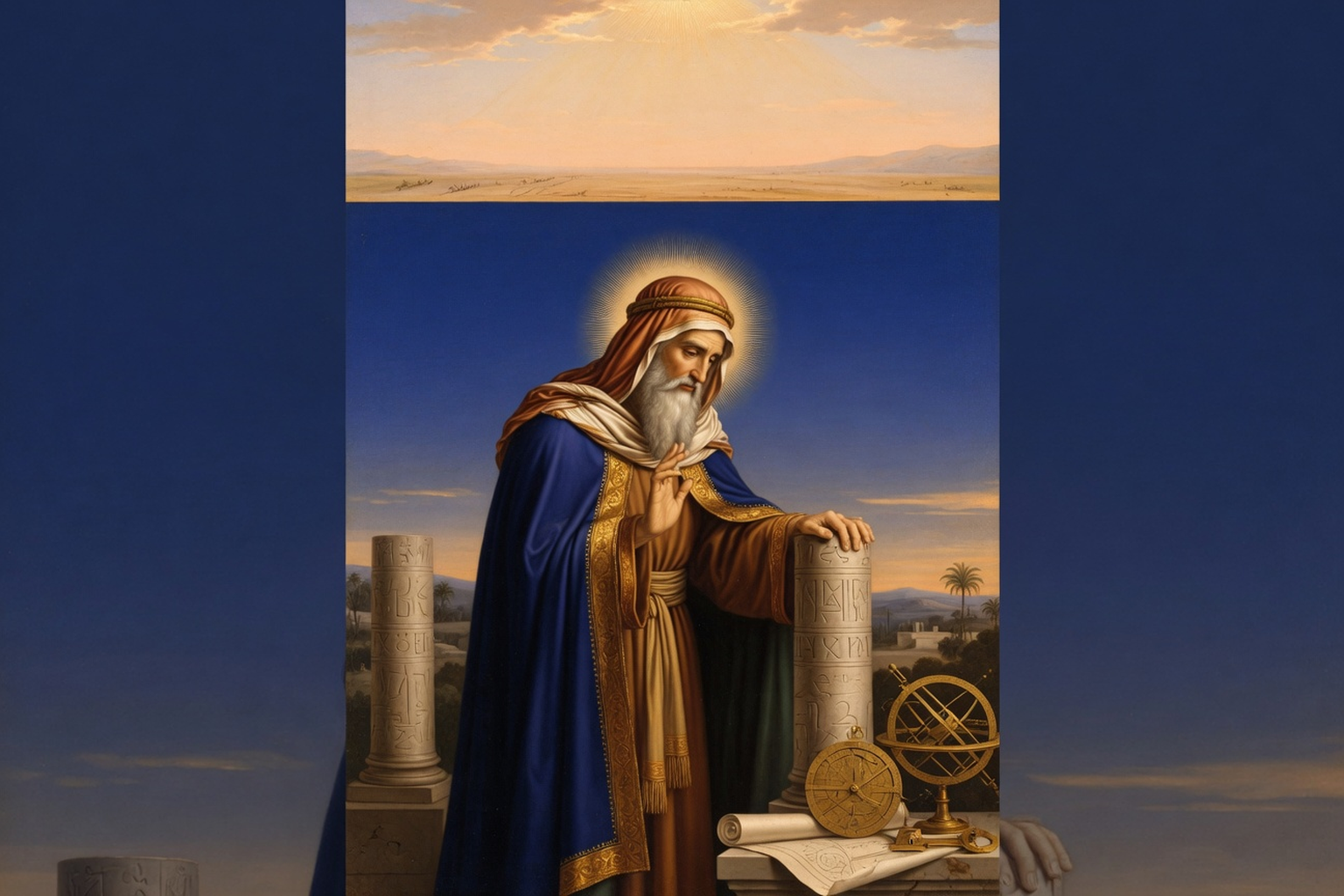
Seth the Patriarch
Patriarch
Son of Adam and Eve born after the death of Abel, Seth is a biblical patriarch recognized for his wisdom and piety. He is credited with the invention of writing and the first discoveries in astronomy. He died at the age of 912, leaving behind a lineage known as the Children of God.
Guided reading
5 reading sections
PATRIARCH SETH (year of the world 1042).
Birth and replacement of Abel
After the murder of Abel by Cain, Eve gives birth to Seth, considered a divine gift to replace her deceased brother.
After the death of Abel, killed by Cain, Eve gave birth to a son named Set Seth Third son of Adam and Eve, ancestor of the lineage of the righteous. h, saying: "God has granted me a son to take the place of Abel, put to death by Cain."
Theology of Filiation and Grace
Although conceived in the corruption of Adam's original sin, Seth benefits from a restoration of innocence by God, founding the lineage of the Children of God.
Adam Adam Friend of Geoffroy, imprisoned by Guermond de Picquigny. had been created in the image and likeness of God, formed in the holiness of God Himself and in original innocence; Seth, says the Scripture, was conceived in the image and likeness of Adam, that is to say, in the corruption of man caused by the sin of his father. But God repaired in him, as He had done in Abel, the innocence lost in the defilement of his origin; so that Seth appeared formed in the image and likeness of his father, having returned to the paths of justice through penance, which has caused his descendants to be named the Childr en of God, to d Enfants de Dieu Designation for the descendants of Seth to distinguish them from the lineage of Cain. istinguish them from those of Cain and the other sons of Adam, whom the Scripture calls Children of men.
Virtues and cultural inventions
Recognized for his wisdom, Seth is credited by ancient historians with the invention of writing and the first discoveries in astronomy.
Seth Seth Third son of Adam and Eve, ancestor of the lineage of the righteous. proved himself, the historian Jo sephus Josèphe Jewish historian who described the death of Herod. tells us, worthy of the hopes he had inspired. He received his father's lessons with docility, became attached to him, and from a young age, conformed to the habits of virtu Suidas Author of a Byzantine lexicon cited for the inventions of Seth. e. Suidas adds that his goodness and wisdom caused him to be blessed by God, and that his name remained famous in the memory of peoples because he was the first to teach men to engrave their thoughts on stone or wood by means of characters. He is also credited with the first discovery in astronomy. Josephus says that his descendants showed their gratitude to him by erecting two columns, one of which could still be seen in Syria in t Syrie Region of origin of the saints. he first century of Christianity.
Medieval reception and apocryphal writings
The name of Seth is associated with 11th-century heretical movements and numerous apocryphal works circulating particularly in Arabia.
Heretics of the 11th century claimed to derive their extravagances and errors from alleged works of Seth that had escaped the flood. The name of this patriarch is still very widespread i n Arab Arabie Region where the name of Seth is widespread and associated with apocryphal texts. ia, where many apocryphal works bear his name.
Death and descendants
Seth passed away at the age of 912, leaving behind numerous offspring, including his son Enos.
Seth died at the age of nine hundred and twelve years (1042); he had had several daughters and several sons, one o f wh Énos Son of Seth. om was Enos.
Annexes & related entities
Structured data for exploration: events, miracles, quotes, places, attributes, patronages, and important entities cited in the text.
Key Events
- Born to replace Abel
- Virtuous education received from Adam
- Invention of writing (characters engraved on stone or wood)
- Discovery of astronomy
- Erection of two commemorative pillars by his descendants
Quotes
-
God has granted me another son in place of Abel, whom Cain killed
Eve (cited in the text)