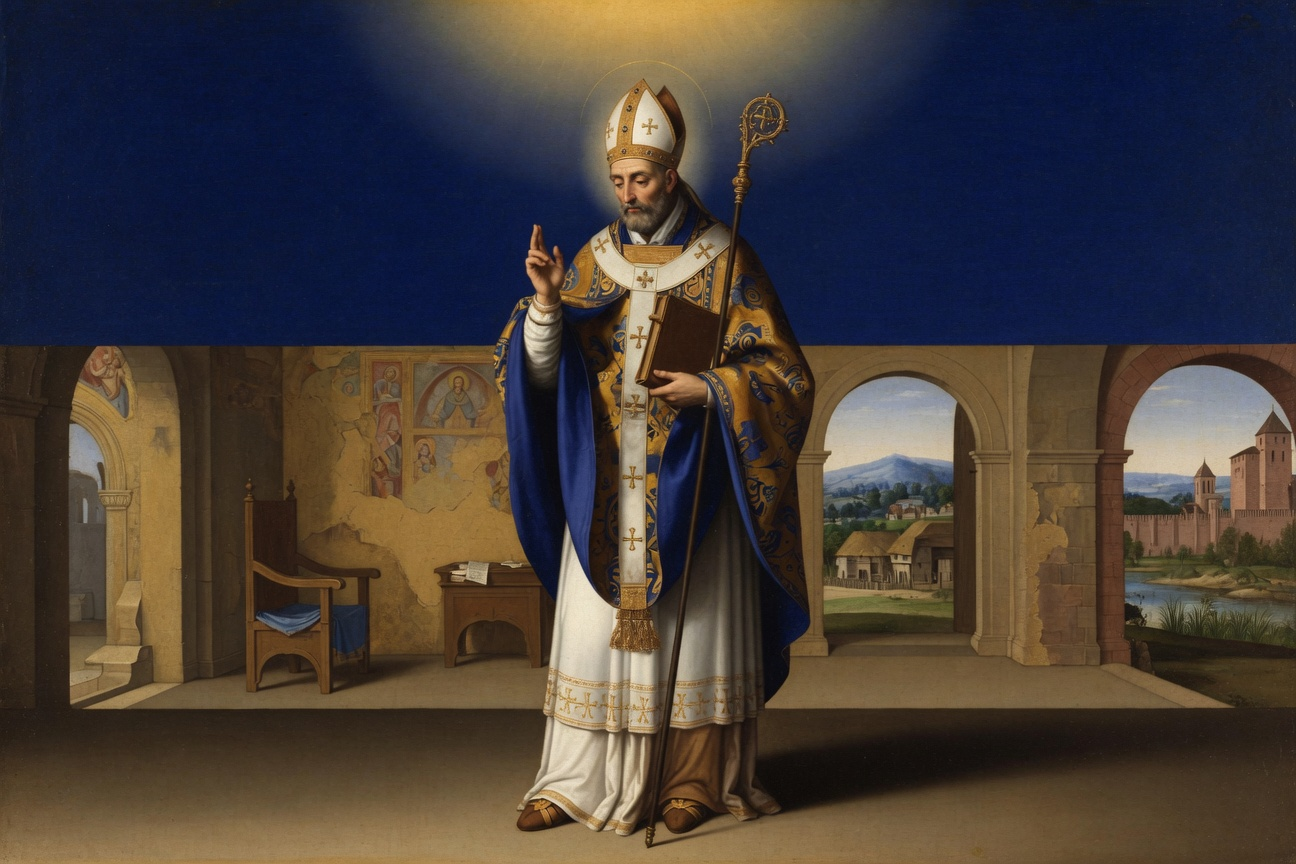
Saint Jacob of Toul
Twenty-fifth bishop of Toul
Bishop of Toul in the 8th century, Jacob participated in the councils of Compiègne and Attigny during the reign of Pepin the Short. After abdicating or retiring to the monastery of Gémonde, he undertook a journey to Rome. He died of illness in Dijon upon his return, where he was buried near Saint Benignus.
Guided reading
5 reading sections
SAINT JACOB, TWENTY-FIFTH BISHOP OF TOUL (circa 768).
Origins and monastic life
Jacob was born in Bertigny in the diocese of Toul. A doubt remains regarding the chronology of his time at the monastery of Gémonde, whether it was before or after his episcopate.
One cannot call into question the birth of Jacob in the dioces e of Toul itsel diocèse de Toul Birthplace of the saint and episcopal see. f, and in the village of Bertign village de Bertigny Birthplace of Saint Jacob. y (Haute-Marne) where his parents had properties which he inherited. What is more difficult to ascertain is whether he was first a religious at the monastery of Gém monastère de Gémonde Abbey located on the Saar where Jacob retired. onde, on the Saar, and then bishop of Toul, or whether he only retired to this abbey after his abdication from the episcopate.
The Episcopate and the Council of Compiègne
Raised to the see of Toul, Jacob participated in the Council of Compiègne in 757, humbly signing the acts as a sinner.
Be that as it may, raised to the episcopal see which he was to render even more respectable and holy, Jacob attended as bishop the Council of Compiègne in the concile de Compiègne Council held in 757 which Jacob attended. year 757; he subscribed to its acts in this manner: *Jacobus peccator subscripti*: I, Jacob, a sinner, have subscribed.
Monastic retreat and the Council of Attigny
Jacob retired to the abbey of Gémonde and participated in the Council of Attigny in 765 during the reign of Pepin the Short.
Only a few years later, according to Father Benoît Picard, Jacob is said to have retired to Gémonde, from where he went in 765 to the Council of Attigny, convened at the request of King Pepin. His name is found among those of the prelates who attended, as follows: *Jacobus episco pus de monasterio Ga monasterio Gammudina Abbey located on the Saar where Jacob retired. mmudina*.
Saint Peter Damian states clearly that Saint Jacob, Bishop of Toul, first chose a successor to replace him, and that he subsequently built a monastery in order to retire there.
Final years, journey to Rome and passing
After a journey to Rome, Jacob fell ill in Dijon while visiting the relics of Saint Benignus and died there around 767-768.
This holy prelate was called, in 761, to the dedication of the church of Gorze. Later, he made the journey to Rome. On his return, he pa ssed Dijon City where the relics were temporarily hidden and disputed. through Dijon, to venerate the re lics of Saint saint Bénigne Missionary from Smyrna, apostle of Burgundy. Benignus, in the church of the monastery of that name. Received with honor by the religious, he was there attacked by a violent illness which, in a few days, led him to his passing, in the year 767 or 768. In accordance with the desire he had previously expressed, he was buried near the tomb of the holy Martyr whom he had come to visit.
Sources
Mention of Abbot Guillaume of Nancy as the source of this account.
Abbot Guillaume, of Nancy.
Annexes & related entities
Structured data for exploration: events, miracles, quotes, places, attributes, patronages, and important entities cited in the text.
Key Events
- Born in Bertigny
- Elevation to the episcopal see of Toul
- Participation in the Council of Compiègne in 757
- Dedication of the church of Gorze in 761
- Participation in the Council of Attigny in 765
- Retreat at the monastery of Gémonde
- Journey to Rome
- Died in Dijon while returning from Rome
Quotes
-
Jacobus peccator subscripti
Acts of the Council of Compiègne, 757 -
Jacobus episcopus de monasterio Gammudina
Acts of the Council of Attigny, 765