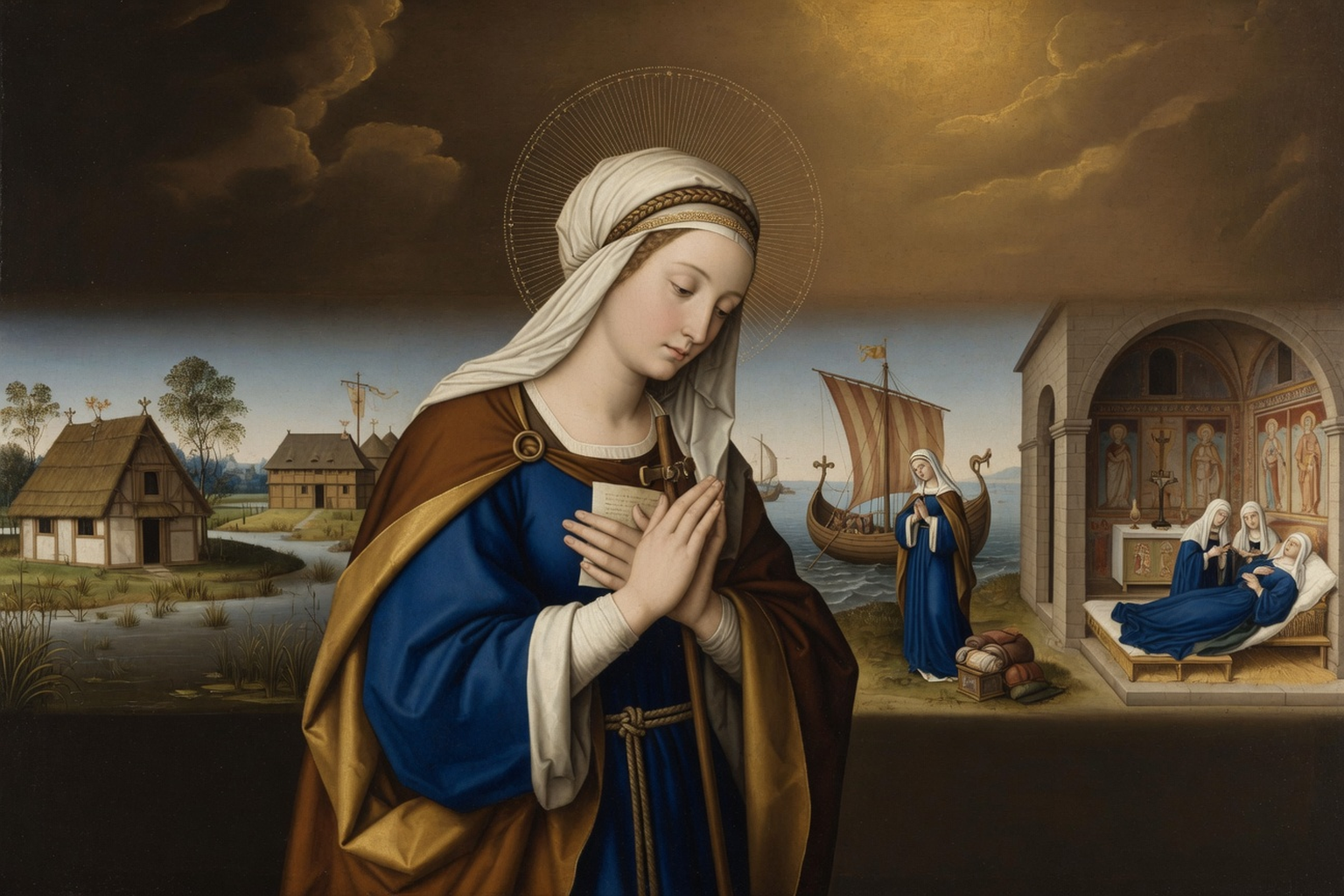
Saint Pega
Pée
Virgin in England
Born of the royal blood of Mercia, Saint Pega lived as a recluse in England before dying in Rome around 719. Sister of the hermit Saint Guthlac, she is honored for her life of penance and the miracles performed by her relics preserved in Rome.
Guided reading
4 reading sections
SAINT PEGA, VIRGIN IN ENGLAND (circa 719).
Origins and vocation
Sister of Saint Guthlac and of the royal blood of Mercia, Saint Pega chose a life of penance and withdrawal from the world.
This saint w Cette sainte English virgin and hermit of the 8th century, sister of Saint Guthlac. as the sister o f Saint Guthl saint Guthlac Famous hermit of Croyland and brother of Saint Pega. ac, the famous hermit of Croyland. Although she was of the royal blood Mercie Former Anglo-Saxon kingdom from which the saint originated. of Mercia, she left the world to lead a life of penance and withdrawal in the place that has since borne her name.
End of life in Rome
After the death of her brother, she went to Rome where she died around 719, her relics performing many miracles there.
She died in Ro me, Rome Birthplace of Maximian. where she had gone after the death of her brother, around the yea r 719. Orderi Orderic Vital Medieval chronicler, primary source for the life of Maurilius. c Vital states that great miracles were performed through the virtue of her relics, which were kept in Rome in a church built in her honor.
Cult and toponymy
Her name survives in the toponymy of Northamptonshire and she was the patron saint of the abbey of Pegeland.
There is still a village in the county of Northampton that takes its name from that of our Saint. Saint Pega Sainte Pègue English virgin and hermit of the 8th century, sister of Saint Guthlac. was also the patron saint o f the abbey of Peg abbaye de Pegeland Abbey of which Saint Pega was the patron. eland, which Saint Edward the Con saint Édouard le Confesseur King of England and saint who donated Steyning to Fécamp. fessor u nited wi Croyland Famous abbey associated with Saint Guthlac and the union of Pegeland. th Croyland. She is called Saint Pee in the county of Northampton, and Saint Fuge at Croyland.
Historical sources
The main historical testimonies come from Orderic Vital, Ingolf, and Harvécôt.
See Ingolf, Orderic Vital, bk. IV, Harvécôt, sect. VIII, ch. XIX, etc.
Annexes & related entities
Structured data for exploration: events, miracles, quotes, places, attributes, patronages, and important entities cited in the text.
Key Events
- Leaves the world for a life of penance and seclusion
- Journey to Rome after her brother's death
- Died in Rome around 719
Miracles
- Great miracles performed by the power of her relics in Rome