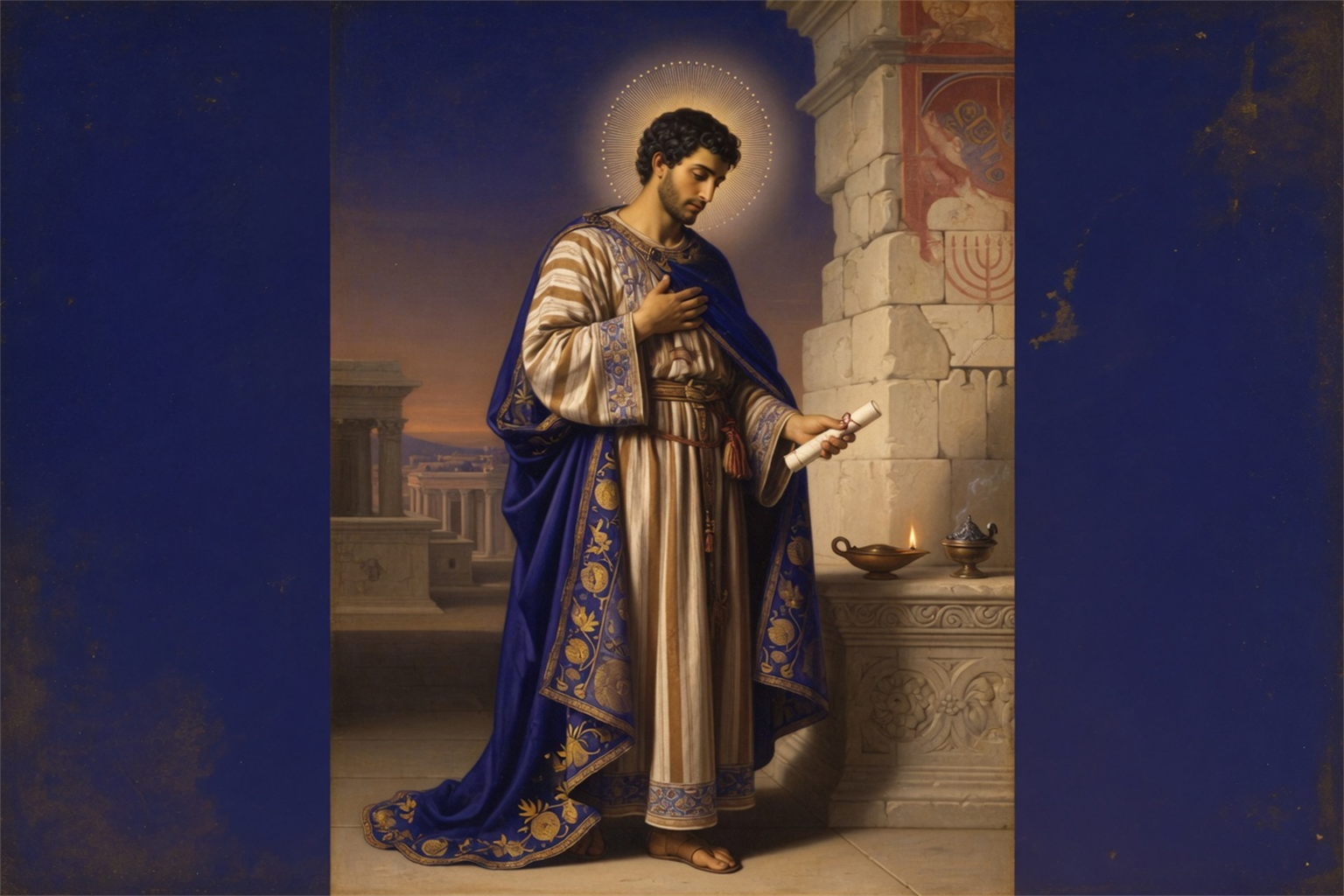
The last of the twelve minor prophets of the Old Testament, Malachi prophesied during the time of Nehemiah. His book foretells the coming of the Messiah, the Forerunner, and the institution of a universal pure sacrifice. He died in the prime of life according to the Chronicon Paschale.
Guided reading
4 reading sections
THE PROPHET MALACHI (415 BC)
Origins and life of the prophet
Malachi is presented as the last prophet sent to the Jewish people before the Messiah, originating from Sapha according to the Chronicle of Alexandria.
Malachi Malachie The last of the Minor Prophets of the Old Testament. was the last of those prophets whom God, for many long years, sent to the Jewish people to instruct them and announce the coming of the Messiah among men. The Bible provides no details about his life or his birth. The Chronicle of Alexandria claims he was from Sapha, a city Sapha Presumed city of origin of the prophet. in the tribe of Zebulun, and tribu de Zabulon One of the twelve tribes of Israel. asserts that he died in the prime of his life and was buried in the tomb of his ancestors. It is impossible for us to verify this information in the absence of any other testimony; however, we possess his prophecies, which are accepted by both the synagogue and the Church. Malachi, the twelfth of the minor prophets, appeared on earth during th e time Néhémie Contemporary of Ezra, governor of Judea. of Nehemiah and prophesied from the year 430 to 415 BC. The book we have from him contains only four chapters, but it is highly remarkable for the prediction he makes therein regarding the Holy Eucharist: "From sainte Eucharistie Central sacrament for which Ambrose defends the real presence. the rising of the sun to its setting, my name is great among the nations, and in every place incense is offered to my name, and a pure offering." One also finds there the coming of Précurseur Saint whose feast day coincides with that of the blessed John. the Forerunner followed by that of the Messiah: "Behold, I send my messenger, and he will prepare the way before me, and suddenly the Lord whom you seek will come to his temple, and the messenger of the covenant in whom you delight." His final words are the announcement of the great drama that must close the existenc e of the worl prophète Élie Prophet who announced the punishment of Ahab. d, and the coming of the prophet Elijah to prepare the human race for it: "I will send you Elijah the prophet before the great and awesome day of the Lord comes." The prediction of the great judgment and the terrible threat of the latter closes the era of the prophets among the Jewish people. The advent of the Son of Man was approaching, and God was about to come himself to instruct the nations and redeem them by his death. Among the Greeks, the feast of the proph et Malach Jérusalem Holy city where the Cross was lost and subsequently recovered. i is celebrated on January 3, but the Latin Church of Jerusalem currently observes it as a semi-double office.
Historical context and ministry
Active between 430 and 415 B.C. during the time of Nehemiah, he is the twelfth of the minor prophets whose writings are recognized by the Synagogue and the Church.
Malachi was the last of those prophets whom God, for many years, sent to the Jewish people to instruct them and announce the coming of the Messiah among men. The Bible gives no details about his life or his birth. The Chronicle of Alexandria claims he was from Sapha, a city of the tribe of Zebulun, and asserts that he died in the prime of life and was buried in the tomb of his ancestors. It is impossible for us to verify this information in the absence of any other testimony; but we have his prophecies, which are accepted by the Synagogue and the Church. Malachi, the twelfth of the minor prophets, appeared on earth in the time of Nehemiah and prophesied from the year 430 to the year 415 B.C. The book we have of his contains only four chapters, but it is highly remarkable for the prediction he makes therein of the Holy Eucharist: "From the rising of the sun to its setting, my name is great among the nations, and in every place incense is offered to my name, and a pure offering." One also finds there the coming of the Forerunner followed by that of the Messiah: "Behold, I send my messenger, and he will prepare the way before me. And the Lord whom you seek will suddenly come to his temple; and the messenger of the covenant in whom you delight, behold, he is coming." His final words are the announcement of the great drama that must close the existence of the world, and the coming of the prophet Elijah to prepare the human race for it: "Behold, I will send you Elijah the prophet before the great and awesome day of the Lord comes." The prediction of the great judgment and the terrible threat of the last days close the era of the prophets among the Jewish people. The advent of the Son of Man was approaching, and God was about to come Himself to instruct the nations and redeem them by His death. Among the Greeks, the feast of the prophet Malachi is celebrated on January 3, but the Latin Church of Jerusalem now observes it as a semi-double office.
Major Teachings and Prophecies
His book announces the institution of the Eucharist, the coming of the Forerunner, that of the Messiah, and the return of the prophet Elijah before the Last Judgment.
Malachi was the last of those prophets whom God, for many years, sent to the Jewish people to instruct them and announce the coming of the Messiah among men. The Bible provides no details about his life or his birth. The Chronicle of Alexandria claims he was from Sapha, a city of the tribe of Zebulun, and asserts that he died in the prime of life and was buried in the tomb of his ancestors. It is impossible for us to verify this information in the absence of any other testimony; but we have his prophecies, which are accepted by both the synagogue and the Church. Malachi, the twelfth of the minor prophets, appeared on earth during the time of Nehemiah and prophesied from 430 to 415 BC. The book we have of his contains only four chapters, but it is highly remarkable for the prediction it makes of the Holy Eucharist: "From the rising of the sun to its setting, my name is great among the nations, and in every place incense is offered to my name, and a pure offering." One also finds there the coming of the Forerunner followed by that of the Messiah: "Behold, I send my messenger, and he will prepare the way before me. And the Lord whom you seek will suddenly come to his temple; and the messenger of the covenant in whom you delight, behold, he is coming." His final words are the announcement of the great drama that must close the existence of the world, and the coming of the prophet Elijah to prepare the human race for it: "Behold, I will send you Elijah the prophet before the great and awesome day of the Lord comes." The prediction of the great judgment and the terrible threat of the last days close the era of the prophets among the Jewish people. The advent of the Son of Man was approaching, and God was about to come himself to instruct the nations and redeem them by his death. Among the Greeks, the feast of the prophet Malachi is celebrated on January 3, but the Latin Church of Jerusalem observes it today as a semi-double office.
Cult and Liturgy
His feast is celebrated on January 3rd by the Greeks and on March 1st by the Latin Church of Jerusalem.
Malachi was the last of those prophets whom God, for many long years, sent to the Jewish people to instruct them and announce the coming of the Messiah among men. The Bible provides no details about his life or his birth. The Chronicle of Alexandria claims he was from Sapha, a city of the tribe of Zebulun, and asserts that he died in the flower of his youth and was buried in the tomb of his ancestors. It is impossible for us to verify this information in the absence of any other testimony; however, we have his prophecies, which are accepted by the synagogue and the Church. Malachi, the twelfth of the minor prophets, appeared on earth during the time of Nehemiah and prophesied from the year 430 to 415 BC. The book we have from him contains only four chapters, but it is highly remarkable for the prediction he makes therein of the Holy Eucharist: "From the rising of the sun to its setting, my name is great among the nations, and in every place incense is offered to my name, and a pure offering." One also finds there the coming of the Forerunner followed by that of the Messiah: "Behold, I send my messenger, and he will prepare the way before me, and suddenly the Lord whom you seek will come to his temple, and the messenger of the covenant in whom you delight." His final words are the announcement of the great drama that must close the existence of the world, and the coming of the prophet Elijah to prepare the human race for it: "I will send you Elijah the prophet before the great and awesome day of the Lord comes." The prediction of the great judgment and the terrible threat of the last days close the era of the prophets among the Jewish people. The advent of the Son of Man was approaching, and God was about to come Himself to instruct the nations and redeem them by His death. Among the Greeks, the feast of the prophet Malachi is celebrated on January 3rd, but the Latin Church of Jerusalem observes it today as a semi-double office.
Annexes & related entities
Structured data for exploration: events, miracles, quotes, places, attributes, patronages, and important entities cited in the text.